
Last updated · YouJobs Career Team
Event Staff or an Event Management Company? A Guide for Sri Lankan Employers
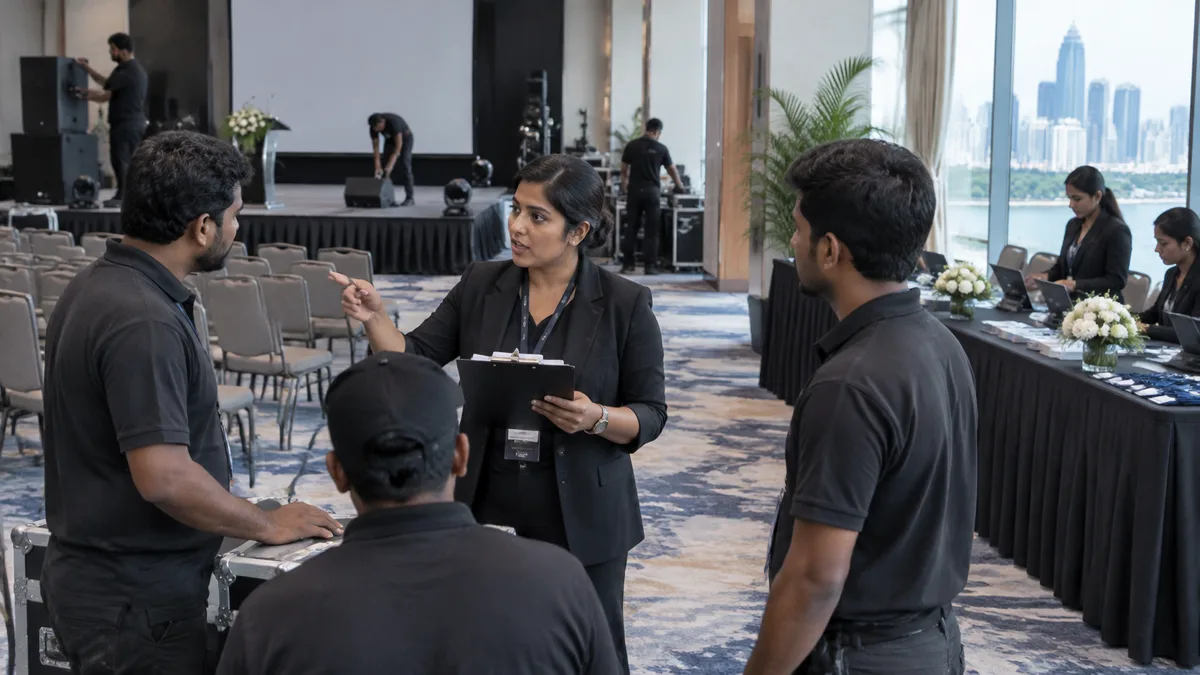
When your company runs a launch, roadshow, conference or staff event, you need people: coordinators, promoters, registration staff, hosts and a crew to run the day. You can recruit them yourself, or hand the whole event to an event management company. The right choice depends on the size of the event and how much your team can take on.
Key takeaways
- Small, simple events can be run in-house with a few temporary staff.
- Larger events need many suppliers, plus staging, AV, permits and promotion, which is where event companies add the most value.
- Hiring temporary staff yourself means handling recruitment, training, payment and supervision.
- Whatever you choose, assign one person in your company as the main decision-maker.
Roles a typical event needs
| Role | What they do |
|---|---|
| Event manager or coordinator | Plans the event, manages suppliers and the timeline |
| Promoters or brand ambassadors | Engage guests, hand out samples, collect leads |
| Registration and ushers | Check in guests, guide seating |
| MC or host | Runs the programme on stage |
| AV and technical crew | Sound, lighting, screens |
| Logistics staff | Set-up, transport, breakdown |
| Photographer and videographer | Capture content for marketing |
| Social media coordinator | Posts live updates and stories |
Option 1: recruit temporary event staff yourself
Works well for: small in-house events, simple product sampling, store promotions and short roadshows.
What you'll need to handle
- Writing job ads and recruiting. You can post short-term roles in sales and marketing jobs.
- Briefing and training staff on your brand and products.
- Uniforms, transport, meals and daily payments.
- Supervising on the day and replacing no-shows.
- Booking every supplier separately: venue, catering, AV, décor and photography.
Option 2: use an event management company
Works well for: launches, conferences, dealer meets, award nights, outstation events and anything with more than about 100 guests.
A company that specialises in event management in Sri Lanka brings its own trained staff, supplier network, AV and production experience, and often handles promotion and content as well. You deal with one team, not ten suppliers.
Pros
- One point of contact.
- Experienced staff who've run similar events.
- Supplier relationships and negotiated rates.
- Backup plans when something goes wrong.
Cons
- A management fee on top of supplier costs.
- Less direct control over each detail, unless you agree on approvals.
Comparison
| In-house with temporary staff | Event management company | |
|---|---|---|
| Best size | Small, simple events | Medium to large events |
| Your team's workload | High | Low to medium |
| Supplier management | You manage each one | Company manages |
| Risk on the day | Higher | Lower |
| Promotion and content | Separate | Often included |
Questions to ask an event management company
- What similar events have you run? Can we see photos and speak to clients?
- Which staff will be on site, and who is the main contact on the day?
- What's included in the fee, and what's charged separately?
- Who handles permits, insurance and safety?
- Do you handle promotion, registrations and filming?
- What's your backup plan for rain, power cuts or no-shows?
For corporate launches, conferences and staff events, see how a specialist approaches corporate event management.
A simple planning checklist
- 10–12 weeks before: set the goal, budget, date and guest numbers. Decide in-house or agency.
- 8 weeks before: book the venue and key suppliers, or appoint the event company.
- 4 weeks before: recruit and brief temporary staff, start promotion.
- 1 week before: confirm numbers, run-sheet and staff roles. Do a rehearsal.
- After the event: pay suppliers and staff, collect feedback, share highlights online.
Frequently asked questions
Should I hire event staff myself or use an event management company?
For small, simple events, recruiting a few temporary staff yourself can work well. For launches, conferences and larger events, an event management company reduces risk and workload by handling staff, suppliers and production together.
What staff do I need for a corporate event?
Most corporate events need a coordinator, registration staff and ushers, an MC, an AV crew, logistics staff, and a photographer or videographer. Promotional events also need brand ambassadors.
How far in advance should I plan a corporate event in Sri Lanka?
Start 10–12 weeks ahead for most corporate events, and earlier for December, the Avurudu season or large conferences, when venues and suppliers are in high demand.
What does an event management company do?
An event management company plans and runs events for clients: booking venues and suppliers, managing staff, staging and AV, handling logistics and often promoting the event and producing content.